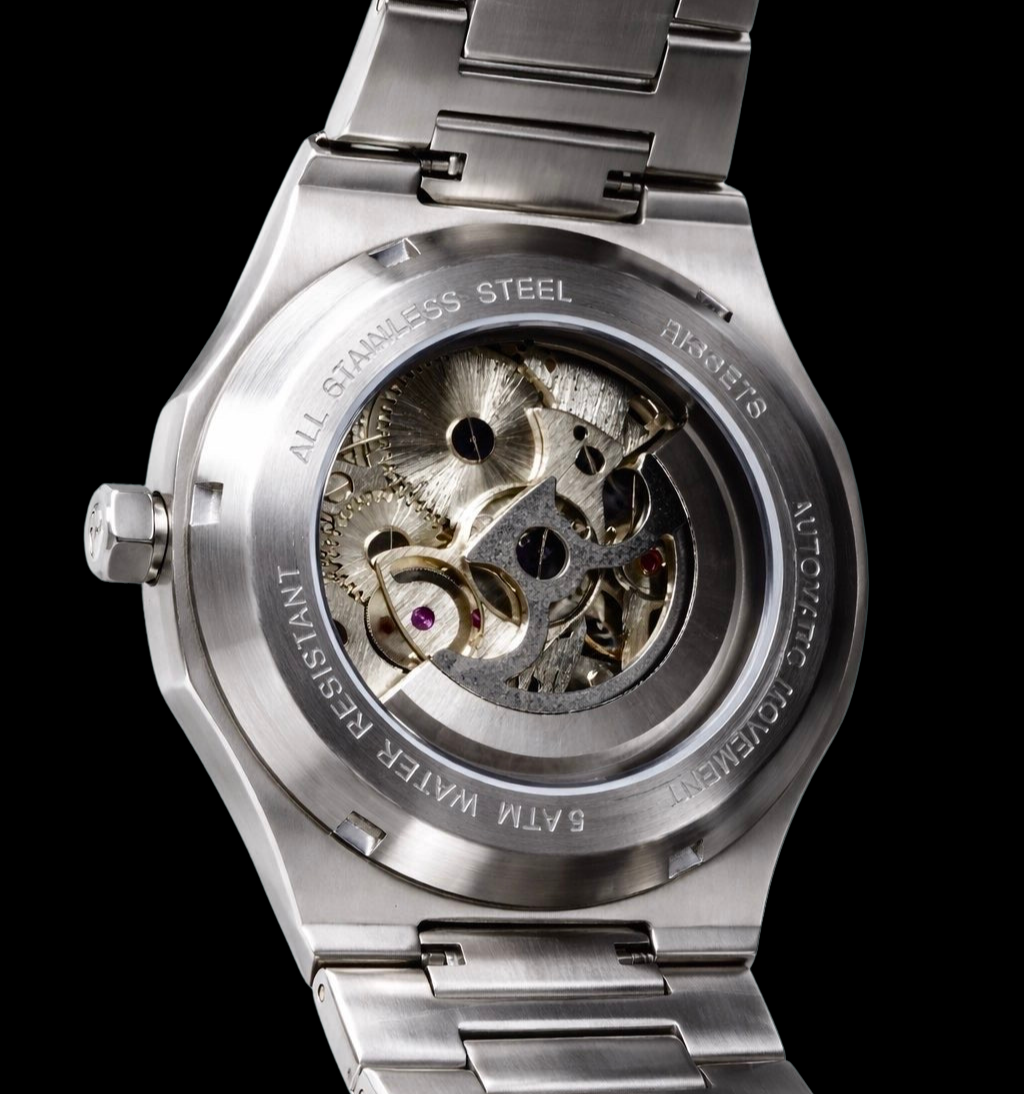
There was a time when “affordable automatic” was a contradiction in terms. A mechanical movement meant a serious price, and anything under a few hundred pounds was almost always a quartz watch wearing borrowed prestige. That era is over. The sub-£300 segment has quietly matured into one of the most interesting corners of watchmaking, where genuine in-house and well-regarded third-party movements sit behind finishing that would have been unthinkable at the price a decade ago.
The mechanical wristwatch carries centuries of engineering behind it — the same fundamental problem of keeping accurate time that drove pioneers like John Harrison, whose marine timekeepers solved the longitude problem and reshaped navigation. What you are buying in a modern automatic, even an inexpensive one, is a direct descendant of that lineage: a self-winding mechanism powered entirely by the motion of your wrist.
This guide sets out what actually separates a good automatic from a forgettable one at this price, then steers you toward the watches genuinely worth owning.
What Makes a Genuinely Good Sub-£300 Automatic
Price alone tells you almost nothing. Two watches at £250 can be worlds apart in quality, and the difference comes down to a handful of measurable things rather than marketing language.
The movement is the obvious starting point. A reliable, serviceable automatic calibre — whether a Seiko NH-series, a Miyota, or a well-regulated clone of a proven architecture — is the foundation everything else rests on. Power reserve, accuracy tolerance, and ease of future servicing matter far more than the number of complications crammed onto the dial.
Beyond the engine, it comes down to construction and finishing. Case material and treatment, crystal type, water resistance, and the quality of the bracelet or strap are where corners get cut on weaker watches. The table below shows the specification baseline that separates a watch worth owning from one that merely works.
| Criterion | Bare Minimum | What to Look For |
|---|---|---|
| Movement | Functioning automatic | Serviceable calibre (Seiko NH35, Miyota 8/9 series) |
| Crystal | Mineral glass | Sapphire or hardened sapphire-coated |
| Case | Plated alloy | 316L stainless steel, brushed/polished detailing |
| Water resistance | 30m | 100m+ for everyday durability |
| Strap / bracelet | Generic strap | Solid-link steel or quality leather, properly fitted |
| Accuracy | Loosely regulated | Within roughly ±20 sec/day |
If a watch meets most of that right-hand column, it is punching well above its weight. The watches that have driven the segment’s maturation are precisely the ones that refused to compromise on these fundamentals while keeping the price honest.
Why the Segment Has Matured
Several things shifted at once. Movement manufacturers scaled up production of dependable automatic calibres, driving unit costs down without sacrificing reliability. Microbrands, freed from the overheads of legacy distribution, began offering sapphire crystals and 316L steel cases as standard rather than as premium upgrades. And buyers got smarter — informed by enthusiast communities that scrutinise finishing and value, brands could no longer hide behind a name.
The result is that the design language once reserved for genuine affordable luxury watches for men — integrated bracelets, skeletonised dials, chamfered cases — now appears at prices that would once have bought only a basic quartz piece. The aesthetic ceiling has risen dramatically.
Standout Examples Worth Owning
Rather than chase a numbered list, it is more useful to think in terms of what each watch is for.
For the everyday workhorse, look to dive-style automatics built around proven calibres with 100m or more of water resistance and a steel bracelet you can wear daily without a second thought. These are the watches that disappear on the wrist for all the right reasons.
For the dress-leaning buyer, a slim automatic with a clean dial, sapphire crystal and a quality leather strap delivers far more presence than its price suggests. Restraint reads as expensive.
For those drawn to mechanical theatre, the skeletonised and open-heart designs now available under £300 let you watch the movement work — the very thing that makes an automatic worth owning over a quartz alternative. A well-executed skeleton dial is the clearest expression of what your money is paying for.
If you want a curated shortlist that applies exactly these criteria, our roundup of the best automatic watches under 300 breaks down the standout pieces by use case and finishing quality.
The Takeaway
A great sub-£300 automatic is no longer a compromise — it is a deliberate choice. Judge any candidate against the fundamentals: a serviceable movement, a sapphire crystal, a proper steel case, sensible water resistance, and honest finishing. Get those right and you are not buying a starter watch. You are buying something genuinely worth owning, and a piece of an engineering tradition that stretches back centuries. Start with the criteria, and you can explore the full collautection with a clear eye for what actually matters.