There is a particular disappointment that comes with an inexpensive watch that announces its price the moment it leaves the box. The lume looks painted on. The bracelet rattles. The dial printing sits slightly off-centre, and the whole thing feels hollow on the wrist. Yet plenty of automatic watches in the same price bracket manage the opposite trick entirely — they read as considered, solid and quietly expensive.
The difference is rarely the headline specification. It comes down to a handful of details that separate a refined affordable automatic from a forgettable one. Once you know where to look, spotting genuine value becomes far easier.
It Starts With Finishing
Finishing is the single most reliable tell. A watch can share a movement and a case size with a far pricier rival and still look cheaper, because the surfaces have been left flat and undifferentiated.
Look for contrast in how metal is treated. Brushed surfaces sitting against polished bevels create depth and catch light in a way that a single uniform finish never will. Chamfered edges — those angled facets running along the case or lugs — are expensive to produce well, so their presence on a budget piece is a strong signal of intent. Run a fingernail along the case edges: crisp, defined transitions feel deliberate, while soft, rounded ones suggest corners were cut.
The dial deserves the same scrutiny. Applied hour markers, where each marker is a small fitted metal component rather than printed ink, add dimension and reflect light. Cleanly registered printing, with no fuzziness on the brand name or the minute track, separates careful assembly from rushed output.
The Movement Underneath
An automatic movement winds itself through the motion of your wrist, and at this price you are almost always looking at a reliable workhorse calibre rather than anything exotic. That is no bad thing — proven movements are easy to service and accurate enough for daily life.
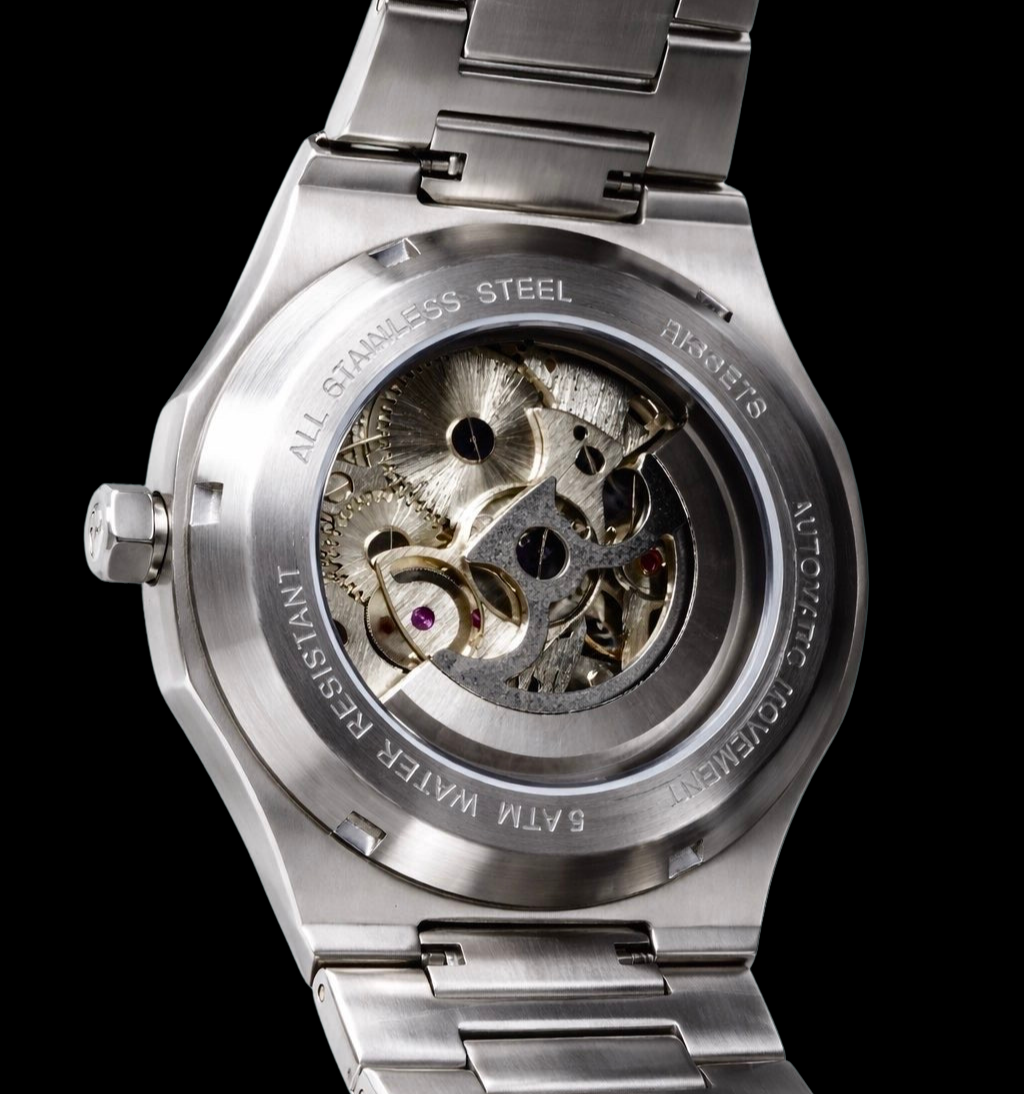
What matters is honesty and execution. A modest movement that is well regulated and sits securely in the case is worth far more than an ambitious one that loses minutes a day. If the watch has an exhibition caseback, decoration such as perlage or a decorated rotor is a pleasant bonus, though never a substitute for keeping good time.
The mechanics of self-winding timekeeping have a long and genuinely fascinating history. The breakthroughs in precision that made portable accuracy possible trace back centuries — Royal Museums Greenwich tells the story of John Harrison’s marine timekeepers and the longitude problem, the work that effectively founded modern precision horology.
Proportions Make or Break It
A watch can be beautifully finished and still look wrong if the proportions are off. This is where many affordable pieces stumble, often by chasing an oversized case that overwhelms the wearer.
Three measurements work together:
| Dimension | What to watch for | Why it matters |
|---|---|---|
| Case diameter | 36–40mm suits most wrists | Oversized cases read as cheap and dated |
| Lug-to-lug | Should not overhang the wrist | Determines whether it actually sits well |
| Thickness | Slimmer wears more elegantly | Slab-like cases feel bulky and inexpensive |
A balanced case that sits flat, with lugs that hug rather than hang over the wrist, signals a brand that prioritised wearability over a spec-sheet number. Dial balance counts too: even spacing between markers, hands sized correctly to reach the track, and a date window — if present — that doesn’t crowd the layout.
A Quick Checklist for Spotting Value
When you are comparing options, work through these in order:
- Finishing contrast — brushed against polished surfaces, defined chamfers, applied markers
- Print quality — sharp, centred, no bleed on the brand name or track
- Case proportions — sensible diameter, controlled lug-to-lug, manageable thickness
- Bracelet or strap — solid links and a substantial clasp, not stamped, rattly metal
- Movement honesty — a proven calibre that keeps time over a flashy one that doesn’t
If a watch clears most of those, it will almost certainly punch above its price on the wrist — which is the entire point of buying smart in this segment.
Bringing It Together
Refined affordable automatics exist in real numbers; the trick is filtering out the filler. Finishing, movement and proportions are the three pillars, and a watch that respects all three rarely betrays its modest cost.
If you want to see how these principles translate into pieces you can actually buy, our guide to affordable luxury watches for men is a useful starting point, and for tighter budgets the roundup of the best automatic watches under 300 applies exactly the same eye for value. For something with genuine presence, our skeleton automatic watch shows what considered finishing and balanced proportions look like in practice.